


-
Purpose: Defining Method
-
Description:
-
Overview: Outlines method for analysis, including tasks and deliverables.
-
Techniques: Initial techniques identified, subject to change.
-
Methodology vs. Standards: Approach based on methodology or org. standards, with potential tailoring.
-
Tailoring and Governance: Tailoring governed by standards, if present; else developed with stakeholders.
-
-
Key Considerations:
-
Alignment: Aligns with change goals.
-
Coordination: Coordinates with overall change activities.
-
Risk Management: Includes tasks to manage risks.
-
Leveraging Success: Uses historically successful approaches and tools.
-
-
Inputs
-
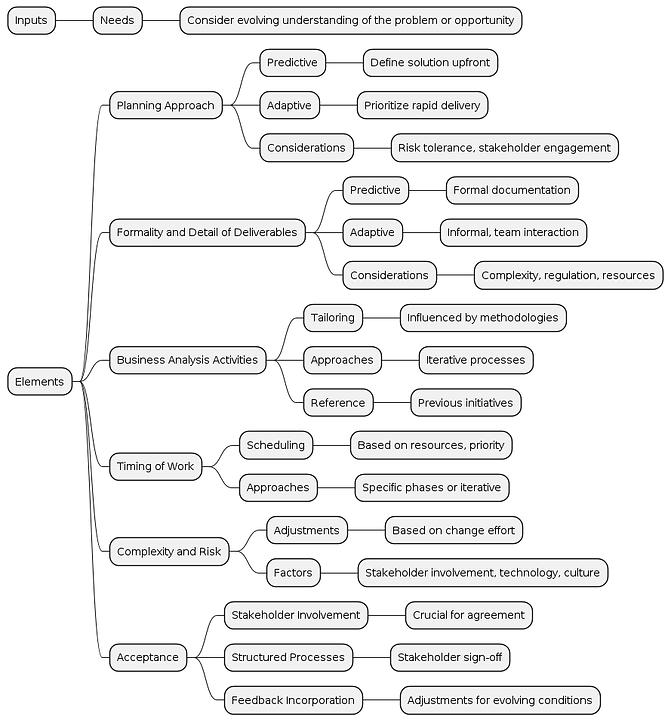
Needs: Consider evolving understanding of the problem or opportunity.
-
-
Elements
-
1. Planning Approach
-
Predictive: Define solution upfront.
-
Adaptive: Prioritize rapid delivery.
-
Considerations: Risk tolerance, stakeholder engagement.
-
-
2. Formality and Detail of Deliverables
-
Predictive: Formal documentation.
-
Adaptive: Informal, team interaction.
-
Considerations: Complexity, regulation, resources.
-
-
3. Business Analysis Activities
-
Tailoring: Influenced by methodologies.
-
Approaches: Iterative processes.
-
Reference: Previous initiatives.
-
-
4. Timing of Work
-
Scheduling: Based on resources, priority.
-
Approaches: Specific phases or iterative.
-
-
5. Complexity and Risk
-
Adjustments: Based on change effort.
-
Factors: Stakeholder involvement, technology, culture.
-
-
6. Acceptance
-
Stakeholder Involvement: Crucial for agreement.
-
Structured Processes: Stakeholder sign-off.
-
Feedback Incorporation: Adjustments for evolving conditions.
-
-
Guidelines and Tools
-
Assessment: Review past performance assessments.
-
Policies: Set decision-making limits based on regulations.
-
Expertise: Seek advice from stakeholders and experts.
-
Methods: Tailor methodologies for specific challenges.
-
Stakeholders: Understand their concerns to shape the approach.
Techniques
-
Brainstorming: Generate ideas for the approach.
-
Business Cases: Assess time-sensitivity and value.
-
Document Analysis: Review organizational assets.
-
Estimation: Determine time required.
-
Financial Analysis: Evaluate value delivery.
-
Decomposition: Break down complex processes.
-
Interviews: Gather input from individuals.
-
Tracking: Monitor issues and risks.
-
Lessons Learned: Incorporate past experiences.
-
Process Modelling: Document the approach.
-
Reviews: Validate with stakeholders.
-
Risk Management: Assess and mitigate risks.
-
Scope Modelling: Define solution boundaries.
-
Survey/Questionnaire: Gather relevant insights.
-
Workshops: Collaborative planning sessions.

Stakeholders:
-
Domain Expert: Essential for providing crucial insights and knowledge within the domain. However, dependency on them poses a risk if unavailable.
-
Project Manager: Responsible for ensuring that the project plan aligns with the schedule and coordinates various activities to meet objectives.
-
Regulator: Approval from regulatory bodies may be necessary for certain aspects of the plan to ensure compliance with relevant laws and regulations.
-
Sponsor: Provides guidance on project needs and policies, offering direction and support throughout the project lifecycle.
Outputs:
-
Business Analysis Approach: This document outlines the strategy for conducting business analysis, specifying what needs to be analyzed, who will be involved, when it will be done, and how it will be executed. It serves as a roadmap for integrating other outputs while also being able to stand alone as a comprehensive plan.
